+1 (212) 382-1314

On 11 November 2026, Sotheby's sold a 23.64-carat padparadscha sapphire in Geneva for CHF 1,120,000. The stone was set in a Belle Epoque diamond brooch and offered as lot 1066 in the Royal & Noble Jewels sale. The estimate was CHF 40,000 to 60,000. The result was more than 18 times the high estimate.
Why did it sell for so much? In our view, two things drove the price: the Sri Lankan (Ceylon) origin, and the size itself. A 23.64-carat unheated Ceylon padparadscha sapphire is rare. That is what the bidding was about.

Image: Sotheby's
SSEF called it a padparadscha sapphire of Ceylon origin, with no signs of heating. The lab also noted a color shift, but still used the padparadscha name. SSEF described the cutting as well-proportioned. We disagree. In our view, the cut is windowed. Light leaks through the stone, and that flattens the color.
We will be candid. This stone is not our taste, and we would not buy it ourselves.
A modern investor may simply like the name padparadscha and the paperwork. On paper, this looks strong: Ceylon, 23.64 carats, unheated, and an SSEF report. Paperwork can tell you origin, size, and treatment. It cannot tell you whether you would want to live with the cut, or how the stone looks in the hand.
The brooch once belonged to Princess Sibylla of Sweden and later to her daughter, Princess Birgitta. That history is real, and it adds interest. We still see the origin and the size as the main reason for the price.
Two days later, Sotheby's Fine Jewelry sale in Geneva offered three more Ceylon padparadscha sapphires. They show why quality still matters.

Image: Sotheby's
This loose oval, lot 791, had a color shift. It was also cut deeper than it was wide, so much of the weight sits in the depth and the stone faces up smaller than the carat weight suggests. In our view, that is why it sold for less. It brought CHF 23,040, below its estimate of CHF 26,000 to 42,000.

Image: Sotheby's
This loose cushion, lot 786, was the largest of the three. In our view, it was zoned and included. It sold for CHF 24,320, only a little more than the 6.87-carat stone, even though it was more than three carats heavier.
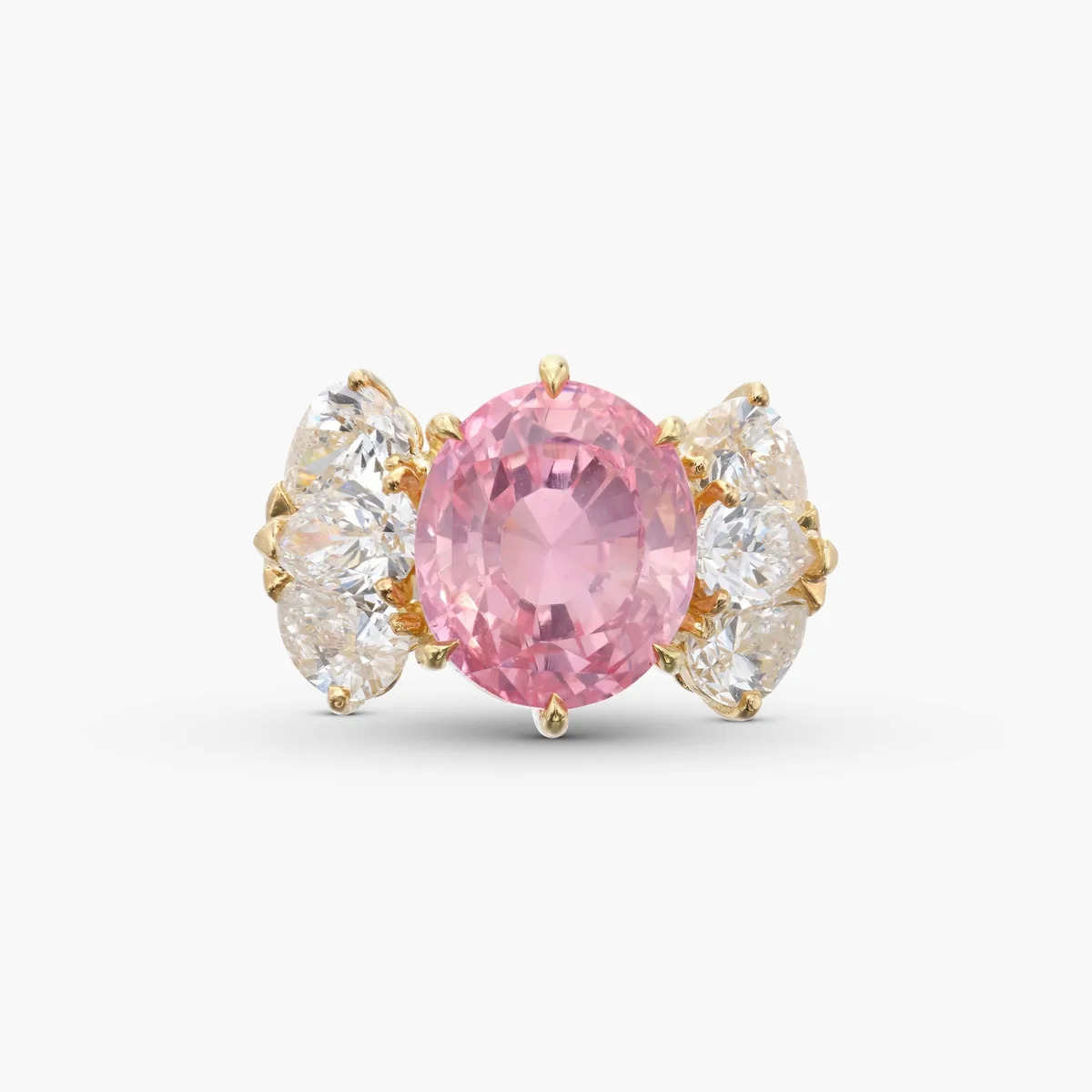
Image: Sotheby's
This oval, lot 784, was set in a ring, with a diamond on each side. SSEF said it was Ceylon, unheated, and that the color is considered stable. In our view, it was a good balance of color, cut, and clarity. It sold for CHF 83,200, well above its estimate of CHF 35,000 to 50,000. That is more than the 6.87-carat and 10.52-carat stones combined.
Origin and size can drive a headline price. Color, cut, and clarity still decide what a stone is worth in the hand. Two padparadscha sapphires can look similar on a report and sell for very different amounts. Look at the stone in person. Read the comments on the report, not only the name on the front. Judge the stone, not just the paperwork.
We do not list our full inventory. Prices are available on request. We hand-select stones we would be willing to own ourselves. If you would like to ask about padparadscha sapphires we hold off the market, please get in touch.
We hold more inventory off-site. Tell us what you want and we'll send options.